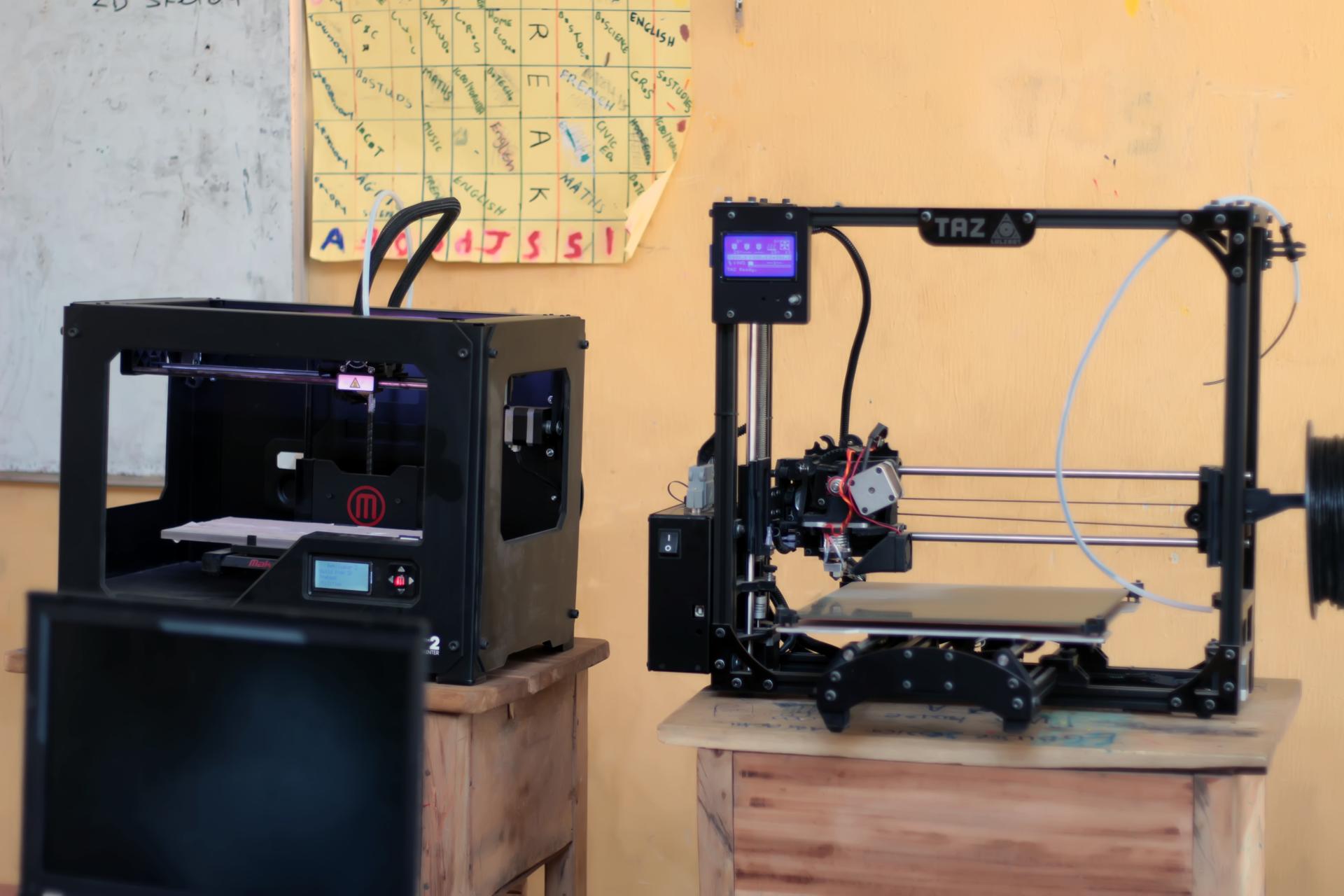
Working with reclaimed material is close to a default here, driven as much by cost as by principle. It is worth being precise about which parts of it help.
Reclaimed timber
Often excellent. Old hardwood is frequently denser and more stable than what is currently available, having already done its moving. The catch is embedded metal — a single hidden nail destroys planer knives and can throw a fragment across a room. Every piece of reclaimed stock gets a metal detector pass before it touches a machine. No exceptions.
Plastics
More caution needed. Reclaimed plastic of unknown type is a genuine hazard: without knowing what a polymer is you cannot know what it releases when cut or heated. Unidentified plastic never goes in the laser cutter. Failed prints and known-type offcuts we regrind and reuse.
Metal
Good, with one hard rule. Galvanised steel releases zinc oxide fumes when welded, and the resulting metal fume fever is genuinely dangerous. Galvanised stock is either stripped properly or not welded. We would rather buy new than take that risk.
Electronics
Harvesting components from dead equipment is excellent practice and teaches more about circuits than any tutorial. Capacitors in mains equipment hold a charge long after unplugging — discharge before probing.
What actually reduces impact
Honestly? Not upcycling. Machines that last, repaired instead of replaced. Designs that use less material. Print settings that do not waste filament on unnecessary infill. Sharing tools across hundreds of people rather than each of them buying their own.
A shared workshop is an environmental intervention before it is anything else.