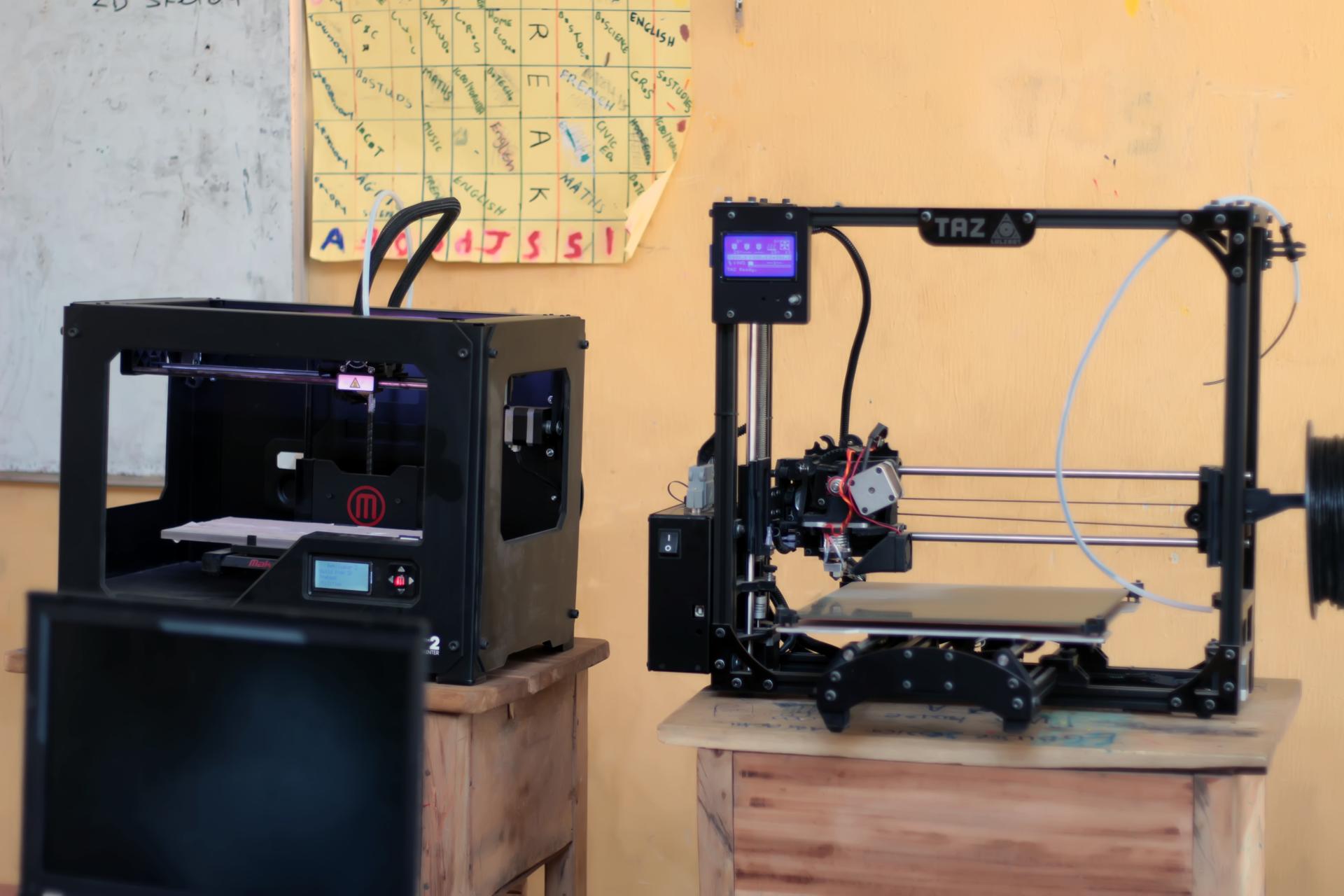
The interesting thing about 3D printing in Nigeria is not the technology, which is the same everywhere. It is the problem it solves here.
Spare parts, not prototypes
In most markets, 3D printing is a prototyping tool — a way to test a design before committing to tooling. Here, a substantial share of what comes off our printers is not a prototype at all. It is a replacement part for a machine whose manufacturer stopped supporting it, or whose spare costs more in shipping than the part is worth.
A plastic gear in an industrial mixer. A housing for a water pump. A bracket that snapped and was never sold separately. Each of these would otherwise mean a dead machine or a long import.
From prototyping to production
Several members have crossed from making one to making hundreds. Print farms — a rack of identical machines running the same part continuously — turn out to be a viable small-manufacturing model when import logistics are the constraint.
The economics are unusual: high per-unit cost by manufacturing standards, but no tooling investment, no minimum order, and no six-week lead time.
The real constraints
Filament supply and power. Filament absorbs moisture from humid air and prints badly once it has; dry storage is not optional. And a print that fails at hour eleven because the power cut is a wasted day, which is why every serious printer here sits behind some form of backup.
Where it goes
The growth we see is not hobbyists becoming manufacturers. It is existing small manufacturers discovering that a printer removes a dependency they had simply accepted.